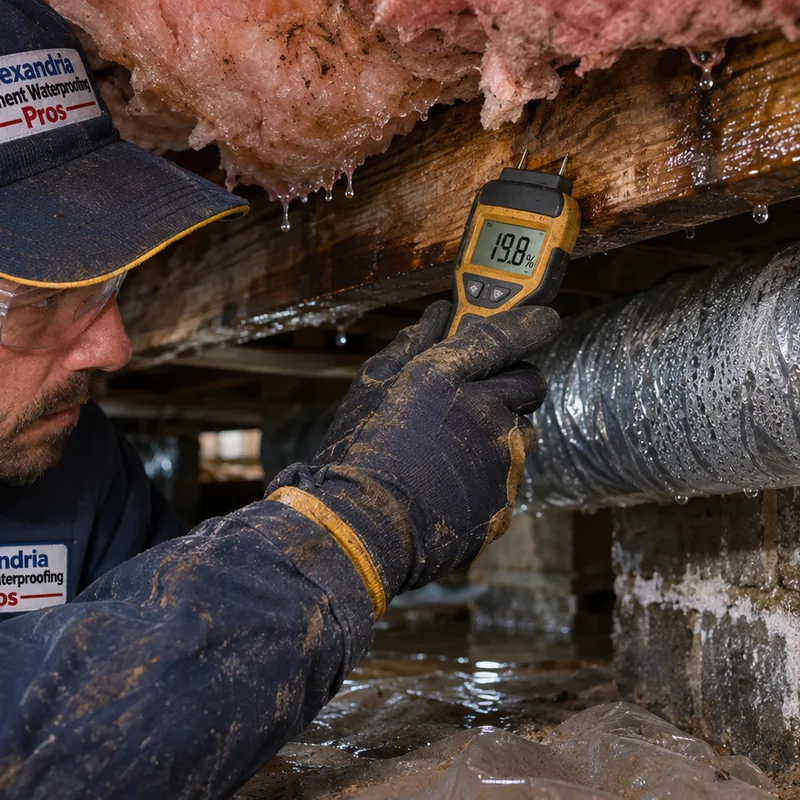
Wood Moisture and Decay
Joists, beams, sill plates, and subflooring are checked for staining, softness, fungal growth, and elevated moisture. Structural damage requires a repair scope based on the affected member and its condition.
Serving Alexandria, Virginia & surrounding areas
Crawl Space Waterproofing · Alexandria, VA
Control ground moisture, humid air, and water intrusion with a repair plan based on the conditions under your home.
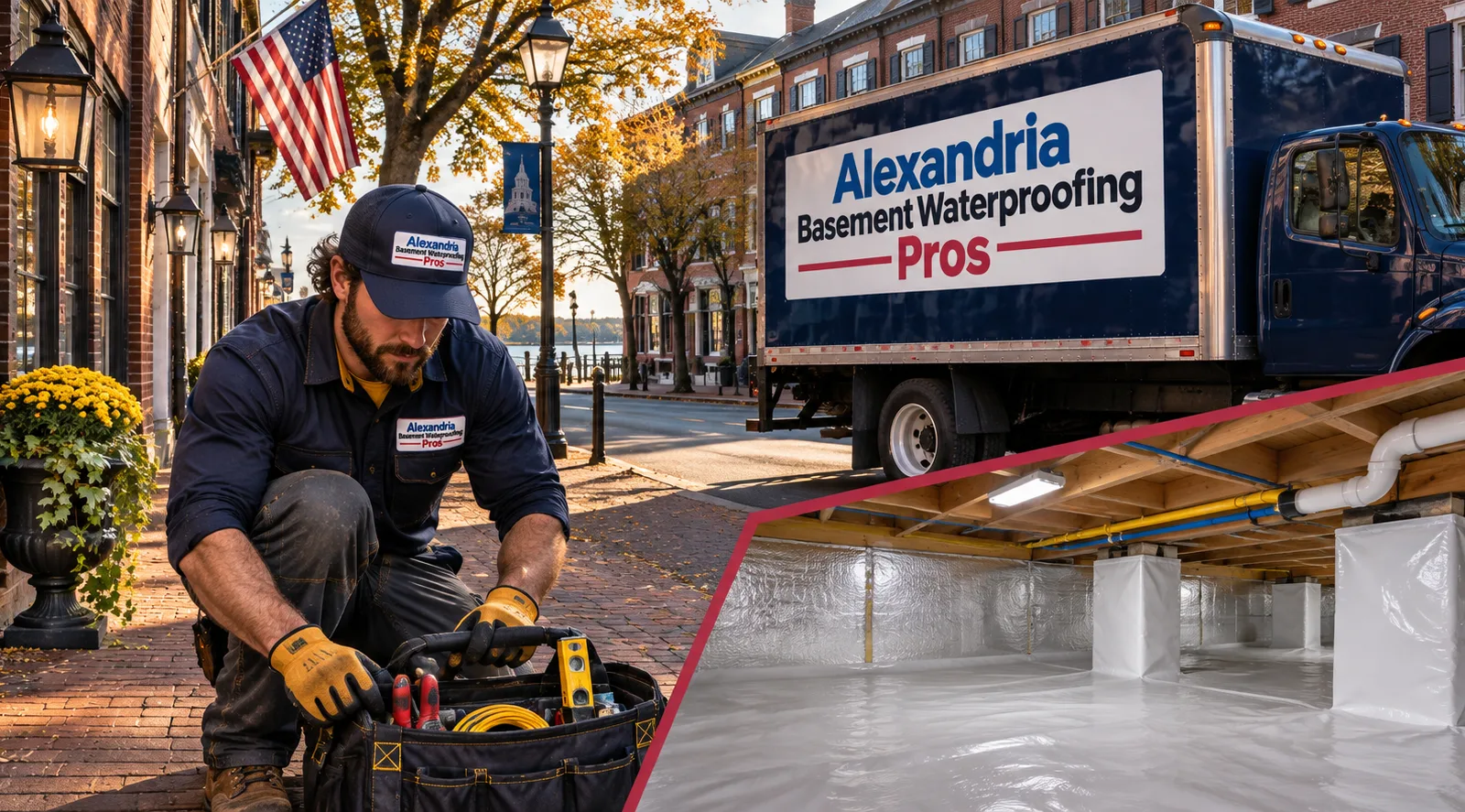
Condition-Based Assessment
Crawl space moisture control starts with identifying how water and humid air enter the space. Common pathways include exposed soil, open foundation vents, leaking plumbing, foundation penetrations, low exterior grades, and groundwater entering near the footing. Damp insulation, condensation on ducts, musty odors, wood staining, standing water, and a loose floor liner are signs that the space needs attention.
Alexandria's humid summers and periods of heavy rain can expose weaknesses in an open or poorly drained crawl space. Older homes may also have tight access, masonry foundation walls, or additions with separate crawl-space compartments. These details affect equipment placement, drainage routes, and how liners are fastened and sealed.
Our work begins with a condition-based inspection rather than a predetermined package. During each inspection, Alexandria's trusted waterproofing team traces visible moisture, inspects the floor and perimeter, reviews vents and access doors, and looks for damaged insulation or wood. The resulting scope separates active water entry from humidity and ground-vapor problems so the recommended work addresses the source.
Water, Vapor, and Humidity Control
Crawl Space Waterproofing is rarely one product. A damp space may require drainage, a sump system, vapor barrier installation, air sealing, or full encapsulation. Plumbing leaks and exterior drainage defects should be corrected before the finished moisture-control system is closed up.
A ground vapor barrier covers exposed soil and reduces water vapor entering the crawl space. Seams should overlap and be sealed, while piers and penetrations need careful detailing. Full Crawl Space encapsulation goes further by extending a reinforced liner up foundation walls and around supports, sealing vents and gaps, and improving the access door. Wall termination height and fastening details should allow for inspection where required.
When liquid water enters at the perimeter, a drainage channel can collect it and direct it to an appropriate discharge point or sump basin. The pump, check valve, discharge route, and electrical supply must suit the installation. A dehumidifier may then manage remaining airborne moisture. It should drain automatically rather than depend on routine bucket emptying.
Inspection Findings
Joists, beams, sill plates, and subflooring are checked for staining, softness, fungal growth, and elevated moisture. Structural damage requires a repair scope based on the affected member and its condition.
Fiberglass batts can sag after absorbing moisture or losing support. Damaged material may need removal so the framing can be inspected and allowed to dry before replacement.
Puddles and sediment lines can point to perimeter seepage, plumbing leaks, poor drainage, or an unreliable pump. The entry route should be identified before a liner covers the floor.
Sweating ducts, damp masonry, and corrosion often indicate humid air meeting cooler surfaces. Air sealing, encapsulation, and mechanical drying may be appropriate after water entry is controlled.
Torn liners, nesting debris, and damaged insulation can accompany pest activity. Active infestations should be handled by the appropriate specialist before final sealing.
Foundation vents, utility penetrations, access doors, and gaps between crawl-space compartments can admit damp outdoor air. Each opening needs a durable detail rather than temporary tape or loose foam.
How the Work Proceeds
Step 1 of 5
We review access, soil or slab conditions, foundation walls, piers, framing, insulation, ducts, pipes, vents, and evidence of past water levels. Limited access and concealed areas are documented before the scope is set.
Step 2 of 5
Ground vapor, humid ventilation, plumbing leaks, surface runoff, and groundwater require different responses. We identify visible sources and explain which corrections belong in the crawl space and which need another qualified trade.
Step 3 of 5
Loose debris, damaged liners, and specified wet insulation are removed. The floor is prepared, sharp objects are addressed, and drainage components are installed when the inspection shows they are needed.
Step 4 of 5
The approved plan may include perimeter drainage, a sump basin and pump, sealed vapor barrier, wall liner, pier detailing, vent closure, access-door improvements, air sealing, and a crawl-space-rated dehumidifier.
Step 5 of 5
We inspect seams and terminations, verify accessible equipment operation, and explain routine checks. Pumps, dehumidifiers, drains, and discharge outlets require periodic attention after installation.
Alexandria Property Conditions
Crawl Space encapsulation in Alexandria is suited to spaces where exposed soil and humid outdoor air repeatedly create damp conditions. It is also useful when a basic floor sheet leaves open seams, uncovered walls, or unsealed piers. Encapsulation creates a more complete boundary, but it does not replace drainage when water is actively entering.
Local housing conditions vary by property. Old Town includes historic masonry homes where access, foundation layout, and preservation considerations can affect the work. Del Ray has older detached homes and additions that may create multiple connected crawl areas. Rosemont also has older housing stock where low clearances can limit equipment choices. In newer parts of the West End, utility routing and finished areas near the access point may shape material handling and discharge planning. Any permit or code question should be confirmed with the City of Alexandria for the specific scope.
A sound encapsulation plan covers the ground, seals liner seams, wraps supports correctly, and terminates the wall liner securely. If the inspection finds active seepage, drainage is handled before the liner is completed. This order keeps water from collecting unseen beneath the finished membrane.

Compare the Complete Scope
The right Crawl Space Repair solution is the smallest complete system that addresses the documented causes. A vapor barrier may be sufficient for ground vapor in an otherwise dry crawl space. Encapsulation may be appropriate when open vents, exposed walls, and recurring humidity need to be controlled together. Perimeter drainage and a sump system become relevant when liquid water enters at the footing or collects on the floor.
Ask for a written scope that states the liner type and thickness, seam treatment, wall termination, pier details, drainage route, pump provisions, and dehumidifier capacity when those components apply. The scope should also identify exclusions, such as plumbing repairs, pest treatment, electrical work, mold assessment, or structural engineering. Clear boundaries make bids easier to compare.
Alexandria homeowners should also consider access and discharge placement. A narrow opening can affect material size and equipment selection. Pump discharge must send water to a lawful, suitable location without creating a problem at the foundation or neighboring property. Exterior grading and downspout management may be part of the overall diagnosis even when the contracted work is inside the crawl space.
Project Cost
Crawl space waterproofing in Alexandria typically ranges from about $3,000 to $15,000, while extensive drainage, repairs, or difficult access can raise the total. Basic vapor barrier installation may fall near the lower end; full encapsulation with drainage, a sump pump, and dehumidification is generally higher.
Final price depends on crawl-space area and height, liner thickness, water entry, debris removal, damaged insulation, framing repairs, electrical needs, and discharge routing. Historic masonry, divided crawl areas, and narrow access can add labor. Exact cost is confirmed after an on-site inspection and written scope.
Book Your Free InspectionAddress damp conditions before new insulation or finishes conceal the source. An inspection can define the water, vapor, and repair work needed for a durable result.
Call for a Free EstimateCommon Questions
No, full encapsulation is appropriate only when the moisture sources and condition of the space justify it. An Alexandria home with ground vapor but no liquid-water entry may need a properly sealed vapor barrier, while a vented crawl space with recurring summer humidity may benefit from wall sealing, vent closure, and dehumidification. Active seepage requires drainage before encapsulation.
Many crawl-space moisture-control projects take several working days, but the schedule depends on access, size, demolition, drying, drainage, and structural repairs. A low-clearance crawl space or a home with separate crawl compartments can require more time. Plumbing, electrical, pest, or engineering work may also affect scheduling.
A vapor barrier alone does not stop standing water caused by seepage, plumbing leaks, or poor drainage. It limits water vapor rising from soil. If water enters near the footing, the repair may require perimeter collection and a sump system; exterior runoff or downspout issues may also need correction before vapor barrier installation.
Wet, contaminated, or badly sagging insulation often needs removal so the framing can be examined and dried. Replacement should wait until the moisture source is controlled. In older Alexandria homes, insulation can conceal rim-joist gaps, masonry conditions, and damaged wood, so removal scope should be based on an inspection rather than appearance alone.
Encapsulation can reduce the moisture conditions associated with musty odors, but odor reduction may take time and depends on removing wet debris, damaged insulation, or decayed material. The crawl space must also dry. A crawl-space-rated dehumidifier and automatic drain may be recommended when humidity remains high after sealing.
Permit needs depend on the actual scope, and the City of Alexandria should confirm requirements for the property. Structural framing changes, new electrical circuits, plumbing work, or certain pump installations may trigger review even when a liner installation does not. The written scope should identify work that requires another licensed trade or municipal approval.
Tell Alexandria Basement Waterproofing Pros what you have noticed under the home. We will assess the moisture sources, explain suitable repair options, and provide a written scope before work begins.