Basement Waterproofing · Arlington, VA

Basement Waterproofing Arlington VA

Control groundwater with a sump pump and drainage plan designed around your basement, crawl space, discharge route, and backup needs.

✓ Moisture source assessment
✓ Drainage and discharge review
✓ Written waterproofing scope
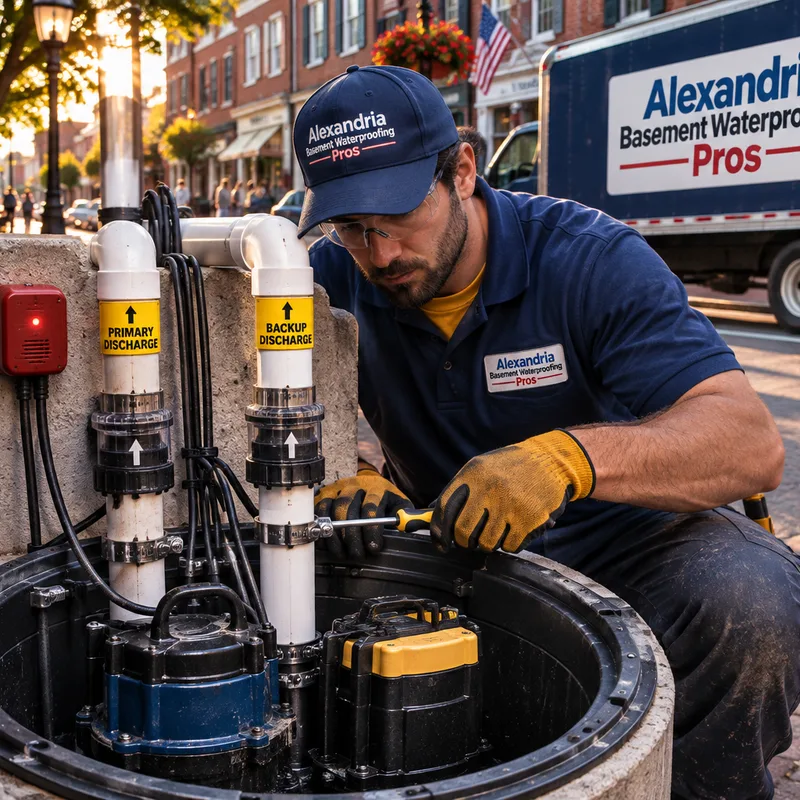
Clean Arlington basement sump pump installation with a sealed basin, fitted lid, check valve, discharge pipe, and tidy electrical connection
Written Waterproofing Scope

Complete Water-Control Planning

A Dry Basement Starts With the Right Water-Control Plan

Sump pump installation gives collected groundwater a controlled route out of a basement or crawl space. The pump is only one part of the system. Basin location, pump capacity, check-valve placement, discharge routing, power supply, and the drainage path feeding the basin all affect how well it works.

Alexandria Basement Waterproofing Pros evaluates where water enters, how it moves, and where it can be discharged safely. Our waterproofing specialists serving Alexandria, VA also work with property owners in nearby Arlington, where dense lots and older housing can make access and discharge planning especially important. The goal is a practical system that responds to the source of moisture rather than masking stains or repeatedly removing standing water.

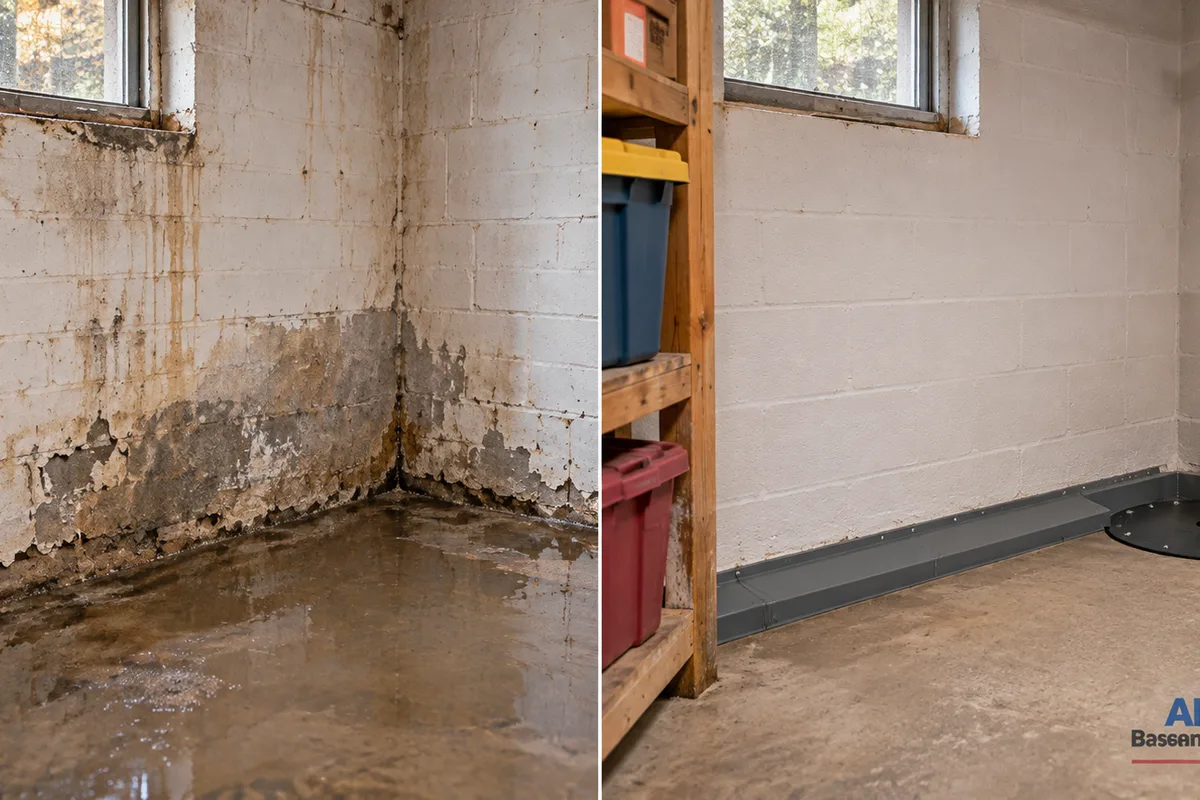
An inspection may identify seepage at the wall-floor joint, water entering through foundation cracks, condensation, a high outdoor grade, or a drainage system that has stopped moving water. These conditions call for different repairs. A sump pump manages collected water; it does not repair every source of basement moisture by itself.

Installation Details

What Sump Pump Installation Includes

A typical installation begins with selecting a low collection point and opening the slab for a sump basin. The basin is set securely, and the surrounding area is restored so groundwater can enter the pit without carrying excess debris into the pump. The system is fitted with rigid discharge piping, a check valve that limits water flowing back into the basin, and a sealed or secure lid.

The pump must have enough capacity for the expected inflow and the total vertical lift, often called head. Pipe diameter, fittings, discharge distance, and elevation all affect actual output. An oversized pump can short-cycle in a small basin, while an undersized unit may not keep up during heavy inflow. A dedicated grounded receptacle is preferred; electrical work must comply with applicable requirements.

Discharge water needs a lawful route away from the foundation without creating ice, erosion, or drainage problems on a neighboring property. Because Arlington County regulates building and land-disturbing work, permit or inspection needs should be confirmed for the actual scope before installation begins.

Professionally fitted sump basin with a sealed cover, vertical discharge pipe, union, and check valve
Accessible fittings and a secure basin cover simplify inspection and future pump service.

Waterproofing Options

Interior, Exterior, and Crawl Space Solutions

Interior Drainage Systems

A perimeter drain installed along the inside foundation edge can collect seepage at the wall-floor joint and direct it to the sump basin. Washed stone, drainage channel details, and wall drainage material are selected according to the foundation and water-entry pattern.

Exterior Drainage Solutions

When surface water contributes to seepage, the plan may involve grading, downspout routing, footing-drain evaluation, or an exterior waterproofing approach. Excavation is not automatically the right answer; access, foundation condition, utilities, and the actual source of water must be assessed first.

Crawl Space Solutions

Crawl space moisture may require ground vapor control, drainage, a sump basin, or encapsulation details around piers and penetrations. The pump should sit at a true collection point, and the discharge route must carry water away from the structure.

Battery Backup Protection

A battery backup pump can operate when the primary pump loses power or cannot handle incoming water. Battery type, charger condition, alarm function, and backup-pump capacity should be checked rather than assumed.

Pump Replacement and Upgrades

Frequent cycling, unusual noise, visible corrosion, failed switches, and repeated breaker trips warrant inspection. Replacement is also an opportunity to correct a loose lid, ineffective check valve, poor pipe support, or unsuitable discharge route.

Moisture Source Diagnosis

Plumbing leaks, window-well entry, foundation seepage, and indoor condensation can look similar. Moisture mapping and inspection help determine whether a sump system, drainage repair, crack treatment, or humidity control fits the condition.

Book Your Free Inspection

How the Work Proceeds

Our Sump Pump Installation Process

  1. Step 1 of 5

    Inspect the Water Entry

    We review damp areas, staining, efflorescence, cracks, existing drains, pump condition, grading, and downspout discharge. In finished basements, the inspection also considers access and how much material must be removed and restored.

  2. Step 2 of 5

    Design the Collection and Discharge Route

    The proposed scope identifies the basin location, drainage connection, primary pump, backup options, discharge piping, and termination point. It also distinguishes active leaks from conditions that need monitoring.

  3. Step 3 of 5

    Prepare and Install

    The work area is protected before the slab or crawl space floor is opened. The basin, pump, piping, check valve, and lid are installed according to the agreed scope, with serviceable components kept accessible.

  4. Step 4 of 5

    Test the Complete System

    Water is introduced to verify float operation, pump activation, check-valve performance, discharge flow, and shutoff. If a backup pump or alarm is included, those components are tested separately.

  5. Step 5 of 5

    Review Care and Maintenance

    The homeowner receives practical guidance on periodic testing, cleaning the basin when needed, watching the discharge outlet, and recognizing a failing switch or blocked line. System details should remain accessible after basement finishing work.

Book Your Free Inspection

Arlington Property Conditions

Waterproofing Arlington VA Homes With Local Conditions in Mind

Arlington properties vary significantly by setting and construction. Lyon Village includes many older detached homes where basement alterations and mature landscaping can complicate exterior access. In Aurora Highlands, compact lots near Crystal City may leave limited room for excavation or a long discharge run. North Arlington neighborhoods such as Donaldson Run include sloped properties, so surface-water direction and discharge elevation deserve careful review. Clarendon has a mix of detached homes, townhouses, and denser redevelopment, which makes shared boundaries and exterior routing relevant to the scope.

Northern Virginia receives precipitation throughout the year, including heavy summer storms and winter freeze-thaw conditions. A discharge line that terminates too close to the foundation can recycle water toward the basin. An exposed outlet can also freeze if it holds water. Proper pitch, a suitable termination point, and freeze-aware routing reduce those risks.

Before excavation or discharge piping is placed, underground utility locations must be considered. Virginia 811 coordinates utility marking requests, but private lines such as irrigation, lighting, or some building-to-building services may require separate locating.
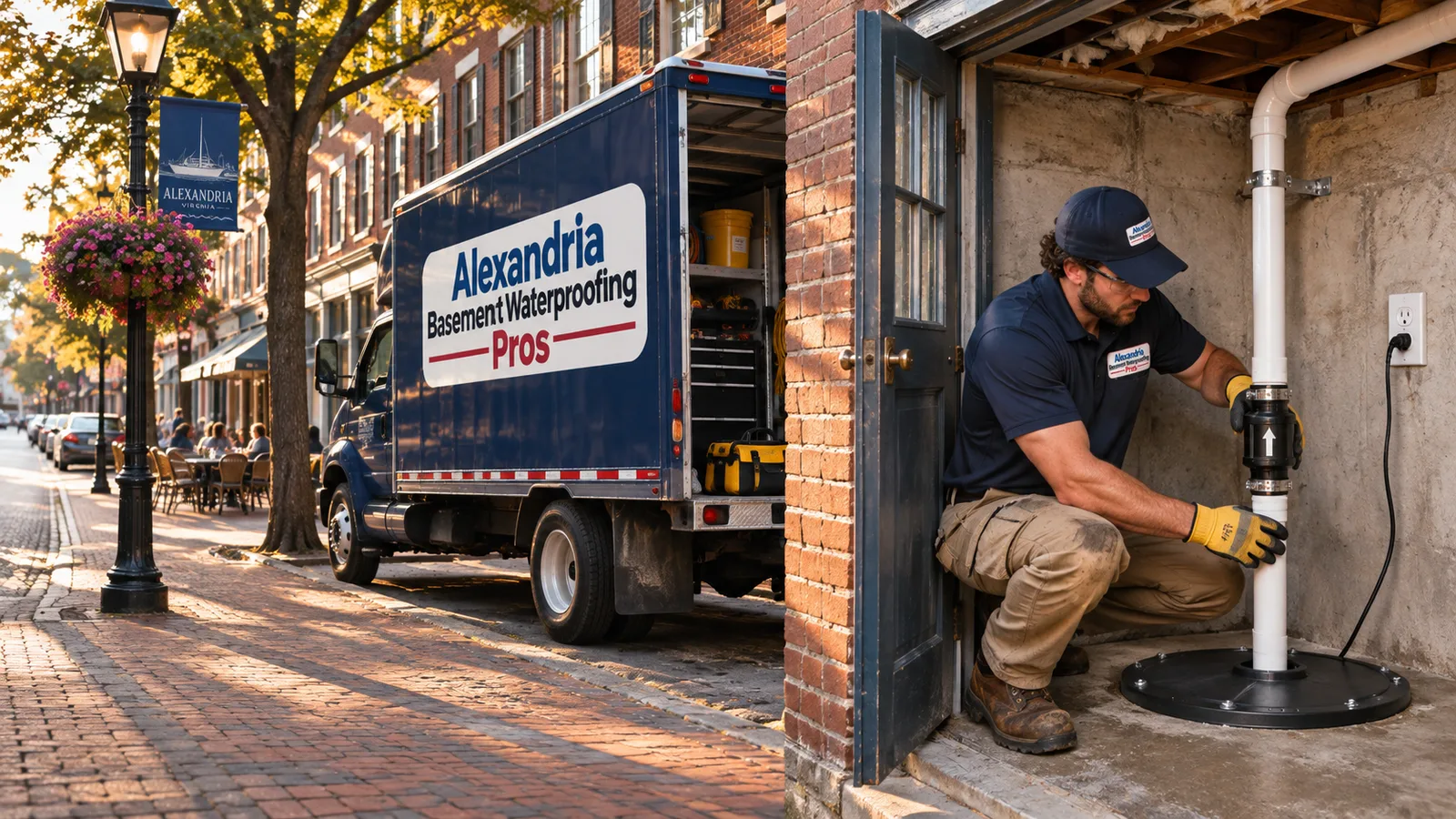
Technician evaluating exterior grade and a proposed sump discharge route beside an Arlington home on a compact sloped lot
Discharge planning accounts for grade, lot boundaries, utilities, and winter exposure.

Pump and Backup Planning

Choosing the Right Pump and Backup Setup

Pump selection should be based on the job rather than horsepower alone. Submersible pumps operate inside the basin and are commonly chosen when a covered, quieter installation is wanted. Pedestal models keep the motor out of the pit but require more open space and may be less suitable where the basin needs a sealed cover.

The pump curve is more useful than the maximum flow printed on a box. It shows how output changes as head pressure increases. Long pipe runs, vertical lift, elbows, and restrictive fittings all reduce delivered capacity. A reliable installation also uses a compatible basin, a dependable float arrangement, a correctly oriented check valve, and discharge piping that is supported and accessible.

Backup planning depends on the consequences of a failure. A high-water alarm warns that the water level is rising. A battery backup pump provides temporary pumping during an outage, while a secondary electric pump adds capacity or redundancy when power remains available. These components address different failure modes and can be combined when the risk warrants it.

Routine care is straightforward. Test the pump with clean water, confirm that the float moves freely, listen for abnormal cycling, and inspect the outlet for blockage. Batteries and alarms should be tested according to their manufacturers' instructions. A pump should never be treated as maintenance-free simply because it has operated quietly.

Book Your Free Inspection

Get a written scope that identifies the water source, pump setup, drainage connections, discharge route, and backup options before work begins.

Call for a Free Estimate

Common Questions

Questions About Basement Waterproofing and Sump Pumps

How much does sump pump installation cost in Arlington, VA?

A straightforward sump pump installation commonly costs about $1,200 to $3,500, while work that adds interior perimeter drainage or a battery backup can cost several thousand dollars more. Final pricing depends on slab thickness, basin size, pump capacity, finished-floor removal, electrical needs, drainage length, access, and discharge routing. The exact cost is confirmed after an on-site inspection and written scope.

How long does a sump pump installation take?

A basic replacement may be completed within part of a day, while a new basin and discharge route often require a full working day or longer. Adding an interior drainage system, restoring a finished basement, or working in a confined crawl space extends the schedule. Compact Arlington lots can also require more time to establish a suitable discharge route.

Do I need a sump pump, an interior French drain, or both?

A sump pump alone is suitable when water already reaches a dependable collection point, while recurring seepage along several walls often calls for an interior perimeter drain connected to the basin. A French drain collects and carries water; the pump removes that water when gravity discharge is not available. Inspection of the entry pattern determines whether one component or a combined system is appropriate.

Where can sump pump water discharge in Arlington?

Sump water should discharge to an approved location that moves it away from the foundation without directing it onto neighboring property, a sidewalk, or another problem area. The correct outlet depends on lot grade, property boundaries, drainage conditions, and Arlington County requirements. Connections to sanitary plumbing should not be assumed acceptable, so the planned route must be reviewed for the specific property.

Should I add a battery backup sump pump?

A battery backup is a sensible option when the basement has a history of rapid inflow, stored valuables, finished rooms, or limited tolerance for an outage. It uses a separate pump and control system to move water when the primary unit loses power or fails. Capacity and expected run time vary with water volume, pumping head, battery condition, and equipment selection.

Can a sump pump fix a wet crawl space?

A sump pump can remove water collected at a crawl space low point, but it does not replace vapor control, drainage, or correction of exterior water sources. Effective crawl space solutions may combine a basin, drainage mat or channel, sealed ground vapor barrier, and controlled discharge. The layout must account for piers, low clearance, access, and any mechanical equipment in the area.

Does basement waterproofing require a permit in Arlington, VA?

Permit requirements depend on the scope, particularly when structural changes, electrical work, exterior excavation, or connections to regulated drainage systems are involved. Arlington County is the authority for work within Arlington, and the proposed scope should be checked before construction. A pump swap is different from cutting a new basin, installing wiring, or altering exterior drainage.

Plan Your Sump Pump Installation

Describe the water problem, where it appears, and whether the basement or crawl space is finished. Alexandria Basement Waterproofing Pros will assess the collection point, drainage route, pump needs, and practical next steps.